
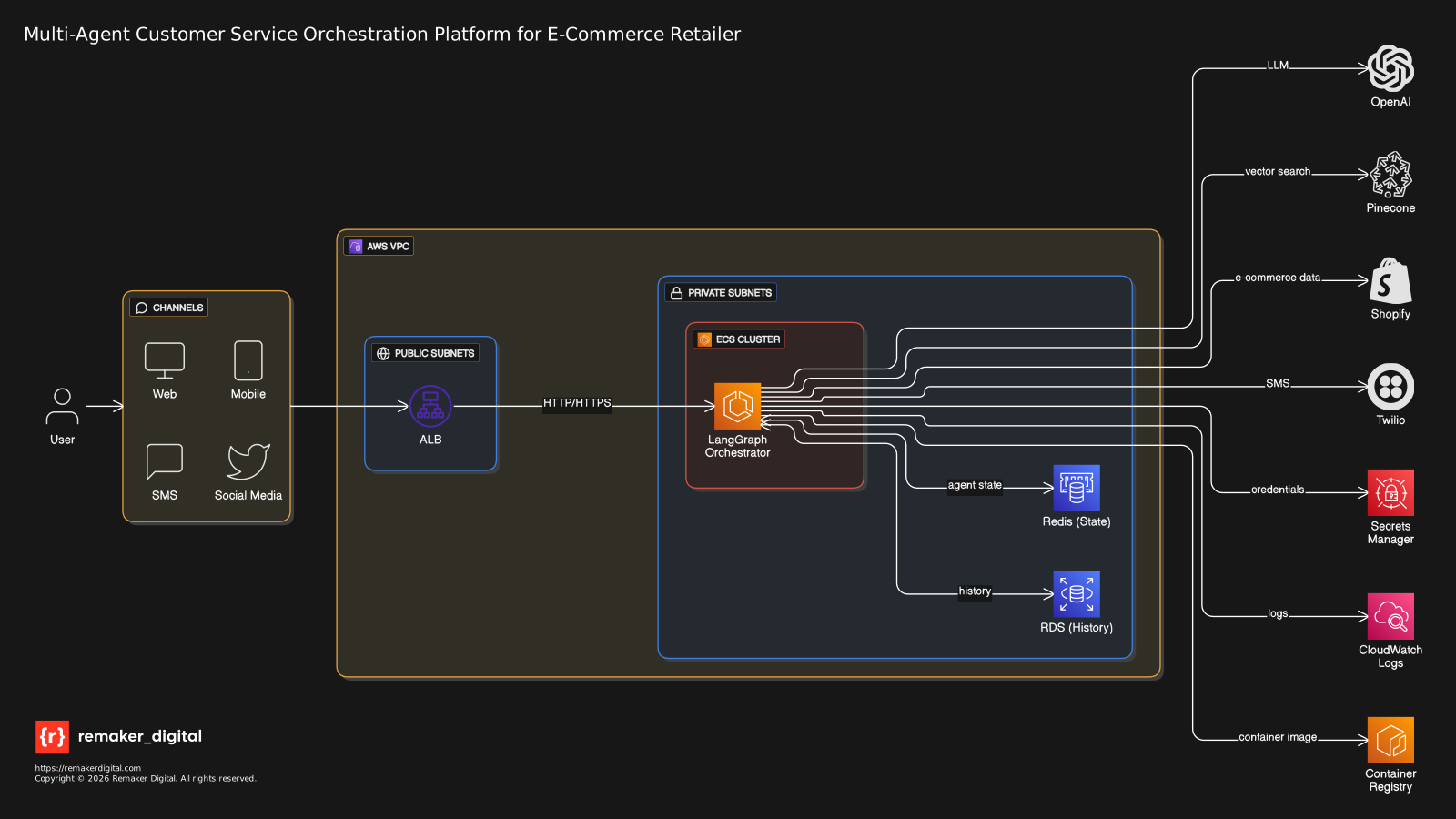
Multi-Agent Customer Service Orchestration Platform for E-Commerce Retailer
Please review our privacy policy and terms of service.

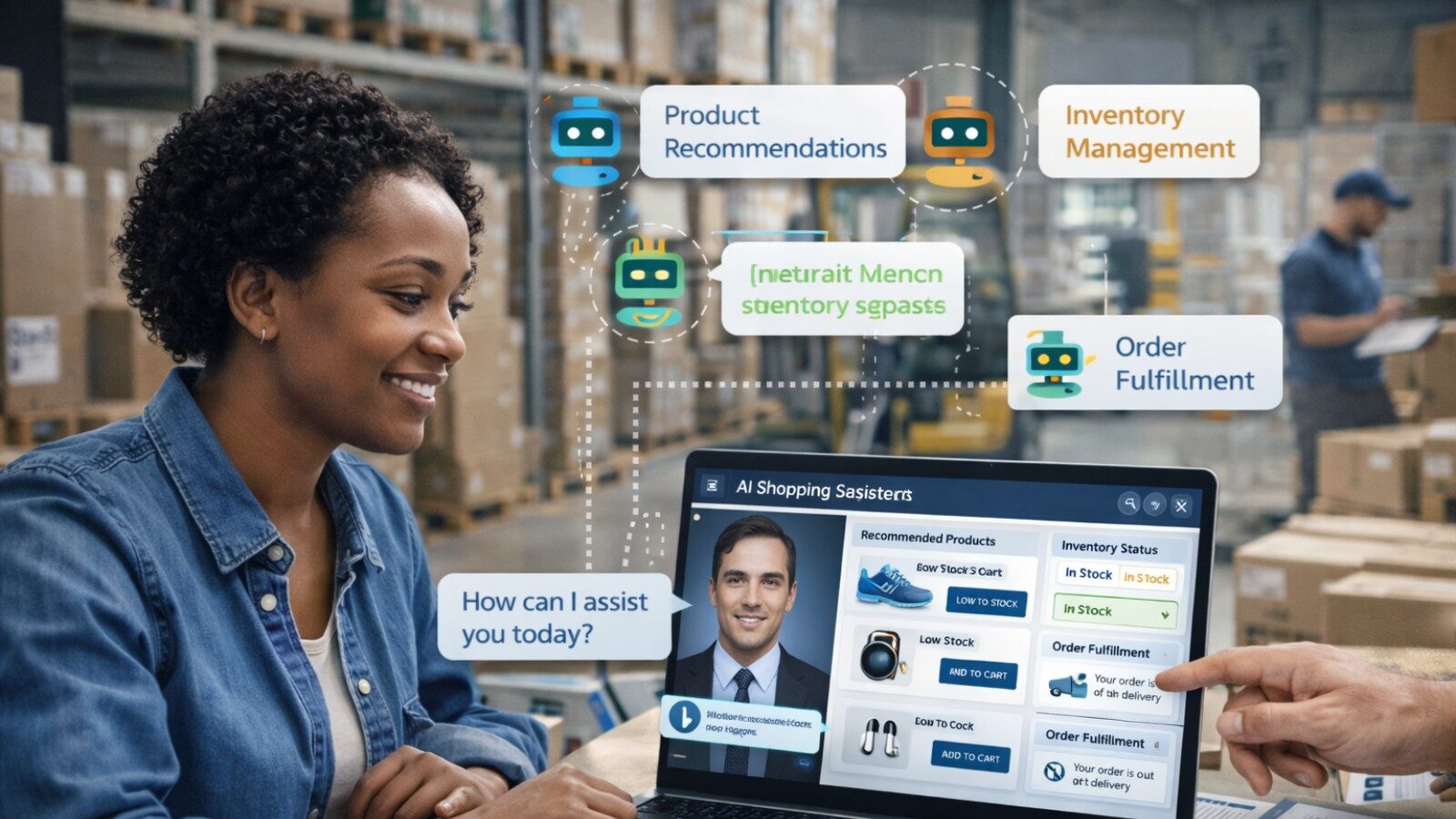

-
45% reduction in customer service costs
-
80% of queries resolved without human intervention
-
60-second average response time (vs. 5-10 minutes)
-
22% increase in conversion rate
-
18% higher average order value
-
35% reduction in product returns
-
500+ concurrent conversations during peak
-
95% customer satisfaction on AI-only interactions
Our customer, a mid-sized fashion e-commerce retailer in Los Angeles with $120M annual revenue, struggled with fragmented customer service across multiple channels. Customers repeated information when switching from chatbot to SMS to phone support, creating frustration and abandoned purchases.
Remaker Digital built a stateful multi-agent orchestration platform that maintains customer context across all channels, reducing customer service costs by 45% while increasing conversion rate by 22% through intelligent agent coordination.
Business Context
The retailer operated a direct-to-consumer fashion brand with strong social media presence. Their customer base expected seamless omnichannel experiences:
- Website traffic: 2M monthly visitors
- Mobile app users: 500K active monthly
- Customer service channels: Web chat, SMS, Instagram DM, phone support
- Average customer service interactions: 15K monthly
- Customer service team: 25 agents across 3 shifts
Customer Experience Challenge
Customers experienced disjointed support when switching channels:
- No Context Preservation: Starting over when moving from chatbot to SMS to phone
- Repetitive Questions: Customers asked for size, color, order status multiple times
- Slow Response Times: Human agents took 5-10 minutes to research customer history
- Abandoned Carts: 68% cart abandonment rate, many due to unanswered pre-purchase questions
- Inconsistent Recommendations: Different agents gave conflicting product suggestions
Existing chatbot solutions lacked state management and couldn’t coordinate across specialized tasks (product search, inventory check, order tracking, returns processing).
Existing Infrastructure
The retailer’s technology stack included:
- E-Commerce Platform: Shopify Plus for product catalog and checkout
- CRM: HubSpot for customer data and marketing automation
- Customer Service: Zendesk for ticketing and live chat
- Inventory Management: NetSuite ERP for real-time inventory across 3 warehouses
- Social Media: Instagram, TikTok, Facebook with direct messaging
- Existing Chatbot: Zendesk Answer Bot (limited, rule-based responses)
Technical Requirements
The solution needed to:
- Integrate with Shopify, HubSpot, Zendesk, and NetSuite APIs
- Support web, mobile, SMS, and social media channels
- Maintain conversation state across channel switches
- Provide real-time inventory and order status information
- Coordinate multiple specialized AI agents (product expert, order specialist, returns agent)
- Escalate to human agents when necessary with full context
- Process 500+ concurrent conversations during peak traffic
Discovery & Requirements (1 week)
Conducted stakeholder interviews with customer service team, marketing, and IT. Analyzed 500+ customer service transcripts to identify common queries and pain points. Documented integration requirements for Shopify, HubSpot, NetSuite, and Zendesk APIs. Mapped customer journey across all channels (web, mobile, SMS, social media).
Architecture Design & Agent Definition (1 week)
Designed multi-agent architecture with LangGraph orchestration. Defined 5 specialized agents (Product Expert, Order Specialist, Returns Agent, Inventory Agent, Escalation Agent). Created state management schema for cross-channel persistence. Designed handoff workflows and escalation rules. Selected technology stack optimized for rapid deployment.
Development & Integration (2 weeks)
Built LangGraph agent orchestration engine with Redis state management. Developed 5 specialized agents with domain-specific prompts and tools. Integrated Shopify, HubSpot, NetSuite, and Zendesk APIs. Created FastAPI backend with async request handling. Built React chat widget and mobile SDK integration. Implemented Twilio SMS and social media connectors.
Testing & Optimization (1 week)
Tested with 200+ real customer service scenarios. Optimized agent routing and handoff logic based on test results. Load tested for 500+ concurrent conversations. Tuned inventory caching strategy for optimal latency. Achieved 95% accuracy on test queries. Fine-tuned escalation thresholds based on customer service team feedback.
Pilot Deployment & Iteration (1 week)
Deployed to 20% of web traffic for controlled pilot. Monitored agent performance and conversation quality in real-time. Collected customer feedback via post-chat surveys. Refined agent prompts and routing logic based on pilot data. Achieved 90% customer satisfaction during pilot phase.
Cross-Channel State Synchronization
Maintaining conversation context when customers switched from web chat to SMS to Instagram DM required sophisticated state management:
- Unified Identity: Linked customer across channels using email, phone number, and HubSpot contact ID
- State Serialization: Stored full conversation graph in Redis with JSON serialization
- Context Compression: Summarized long conversations using GPT-3.5-turbo to prevent token limit issues
- Real-Time Sync: <500ms state retrieval across all channels
Agent Coordination and Handoffs
Coordinating multiple specialized agents without duplicating work or confusing customers:
- LangGraph Workflows: Defined explicit agent transition rules (e.g., Product Expert → Inventory Agent → Order Specialist)
- Shared Memory: All agents access same conversation state and customer profile
- Handoff Summaries: Each agent generates context summary for next agent in chain
- Conflict Resolution: Router agent arbitrates when multiple agents could handle query
Real-Time Inventory Integration
NetSuite’s API latency (2-3 seconds) created poor user experience. We optimized through:
- Inventory Caching: Redis cache with 5-minute TTL for high-demand SKUs
- Proactive Checks: Product Expert Agent pre-fetches inventory before recommending items
- Graceful Degradation: Show “checking availability…” message during API calls
Escalation Decision Logic
Determining when AI should escalate to human required nuanced understanding:
- Confidence Scoring: GPT-4 assigns confidence score to every response
- Frustration Detection: Sentiment analysis flags customers expressing frustration
- Complexity Rules: Custom orders, bulk purchases, damaged goods auto-escalate
- Context Handoff: Human agents receive full conversation summary and recommended actions
Customer Service Efficiency Gains
The multi-agent platform transformed customer service operations:
- 45% reduction in customer service costs: Automated 70% of routine inquiries
- 80% of queries resolved by AI: Without human intervention
- 60-second average response time: Down from 5-10 minutes with human agents
- 500+ concurrent conversations: Handled during peak traffic (Black Friday)
- 95% customer satisfaction: For AI-only interactions (measured via post-chat survey)
Revenue Impact
Beyond cost savings, the system drove measurable revenue growth:
- 22% increase in conversion rate: From cart abandoners receiving proactive AI assistance
- 18% higher average order value: From personalized product recommendations
- 35% reduction in returns: Better sizing guidance pre-purchase
Lessons Learned
- Stateful Agents Are Critical for E-Commerce: Customers expect continuity across channels. LangGraph’s persistent state management was essential for seamless experiences.
- Specialized Agents Outperform Monolithic Chatbots: Routing queries to domain-specific agents (product expert, order specialist) improved accuracy and reduced hallucinations.
- Proactive AI Creates Value: Agents that anticipate customer needs (e.g., checking inventory before recommendation) deliver superior experiences to reactive Q&A bots.
- Human Escalation Must Be Seamless: Customers don’t care about AI vs. human—they care about fast, accurate help. Smooth handoffs with full context are essential.
- Real-Time Integrations Make or Break UX: Caching and proactive API calls are necessary to meet customer expectations for instant responses.
Appendices
Integration Overview
The system integrates with e-commerce infrastructure through:
- Shopify API: Product catalog, order data, customer purchase history, cart management
- HubSpot CRM: Customer profiles, email preferences, segmentation, marketing campaigns
- NetSuite ERP: Real-time inventory across warehouses, shipping ETAs, fulfillment status
- Zendesk: Ticket creation for human escalation with full conversation context
- Twilio: SMS gateway for text message support and notifications
- Social Media APIs: Instagram Graph API, Facebook Messenger for social commerce
Model Selection Rationale
OpenAI GPT-4: Used for Product Expert Agent and Router Agent due to superior reasoning and nuanced product recommendations. Critical for understanding style preferences and handling complex queries.
OpenAI GPT-3.5-turbo: Used for Order Specialist, Returns Agent, and Inventory Agent where structured API calls dominate over creative reasoning. 10x more cost-effective while maintaining high accuracy.
LangGraph: Chosen for agent orchestration due to built-in state management, explicit workflow graphs, and easy debugging of agent transitions.
Pinecone: Vector database for semantic product search and customer history retrieval. Outperformed Chroma and Weaviate for high-volume concurrent queries.
Cost Analysis
Monthly operational costs approximately $3,500-$4,500:
- OpenAI API: $2,000-$2,500 (GPT-4 + GPT-3.5-turbo for 15K monthly conversations)
- Pinecone: $800/month (vector database for 100K product embeddings + customer history)
- AWS ECS + Redis: $600/month (container hosting, auto-scaling, state storage)
- Twilio: $300/month (SMS messaging for 2K monthly SMS conversations)
- Monitoring & Logging: $200/month (DataDog for performance tracking)
Security Architecture
E-commerce security and PCI compliance:
- Network Security: AWS VPC with private subnets, security groups, NACLs
- API Authentication: OAuth 2.0 for all third-party integrations (Shopify, HubSpot, NetSuite)
- Data Encryption: TLS 1.3 in transit, AES-256 encryption at rest
- PCI Compliance: No payment card data stored; delegated to Shopify’s PCI-compliant payment processing
- Customer Data: Personal information encrypted, access logged for GDPR compliance
- Rate Limiting: API throttling to prevent abuse and DDoS attacks
- Monitoring: Real-time alerts for errors, latency spikes, and security events
- Availability: Auto-scaling ECS tasks, 99.9% uptime SLA, multi-AZ deployment
-
Stateful agent orchestration with LangGraph workflow engine
-
Multi-channel support (web, mobile app, SMS, social media)
-
Personalized product recommendations with conversation memory
-
Real-time inventory checking and order status tracking
-
Autonomous agent handoffs between specialized support agents
-
Human escalation workflows for complex issues
The agent orchestration platform leverages LangGraph, OpenAI GPT-4, and Pinecone vector database to deliver stateful, multi-agent customer service with real-time integrations across Shopify, HubSpot, and NetSuite.